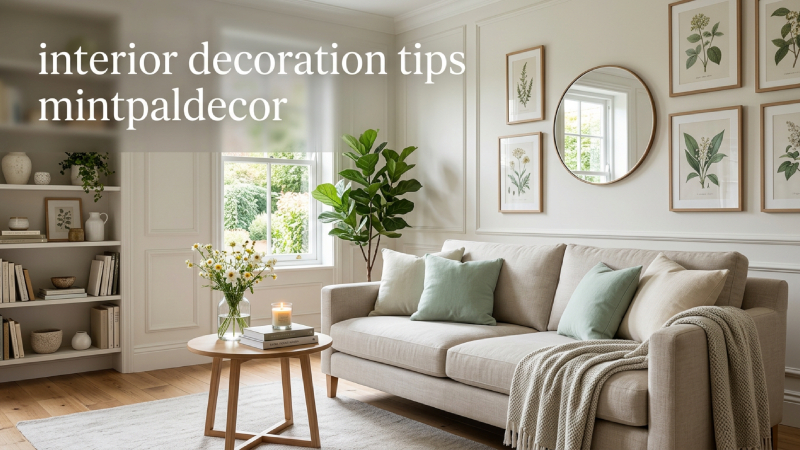
A well-decorated home is not necessarily the one with the most expensive furniture or the latest trends. Good decoration comes from making choices that fit the room, support everyday activities, and create a comfortable visual balance. The keyword interior decoration tips mintpaldecor appears to refer to practical home-decorating guidance associated with MintPalDecor.
For anyone refreshing a bedroom, living room, dining area, or small apartment, the best place to begin is not the shopping list. Start by understanding the space itself. Its size, natural light, furniture, colors, and daily purpose should influence what you add or remove.
Begin With How the Room Is Used
Every room has a job.
A living room may need comfortable seating and enough open space for movement. A bedroom should support rest while providing practical storage. A study needs an arrangement that makes reading or working convenient.
Before decorating, observe the room for a day or two. Notice where people naturally walk, where objects accumulate, and which areas are rarely used.
This simple observation can reveal problems that decorative purchases cannot solve.
For example, if a chair constantly blocks a doorway, changing its color will not improve the room. Moving it may.
Think About Scale Before Style
One of the most useful decorating principles is proportion.
Furniture should make sense for the dimensions of the room. A large sectional can overwhelm a compact living area, while tiny furniture can look disconnected in a large space.
Measure before purchasing major pieces. Check:
- Room dimensions
- Door and window positions
- Available walking space
- Furniture width and depth
- Ceiling height
- Rug dimensions
Also measure the route from the entrance to the room. A piece that technically fits inside the room may still be difficult to bring through a doorway or hallway.
This small planning step can prevent expensive mistakes.
Create a Color Relationship
You do not need dozens of colors to make an interior interesting.
Instead, select a primary color family and introduce supporting shades through furniture, fabrics, artwork, and accessories.
A neutral foundation can make larger purchases easier to coordinate. Stronger colors can then appear in smaller elements that are easier to replace.
For example, a room with warm neutral walls could incorporate:
- Natural wood
- Muted green
- Cream textiles
- Dark metal accents
The goal is not perfect color matching. Some variation usually gives a room more personality.
Let Natural Light Influence Your Choices
Natural light changes how colors and materials appear throughout the day.
A wall that looks warm in the afternoon may appear completely different under evening lighting. Before committing to a paint color, examine a sample at different times rather than judging it from a store display alone.interior decoration tips mintpaldecor?
Also consider what is blocking available daylight.
Heavy curtains, oversized furniture, or tall storage units can reduce the amount of light reaching the room. Sometimes rearranging an existing space can make a noticeable difference without purchasing anything.
Layer the Lighting
A single ceiling fixture rarely needs to do all the work.
Different lighting sources can serve different purposes. General lighting illuminates the room, task lighting supports specific activities, and accent lighting can highlight decorative or architectural features.
A practical living room might combine:
- A ceiling fixture for general illumination
- A floor or table lamp beside seating
- Small accent lights near artwork or shelving
This creates more flexibility. Bright light can be useful when cleaning or working, while softer sources can make the same room more relaxing later.
Mix Materials Instead of Buying Matching Sets
A room can feel flat when every surface has the same visual character.
Introducing different materials adds depth. Wood, glass, metal, woven fibers, ceramic, and fabric can coexist when they share a sensible color or design connection.
You do not need a large collection of materials. A few contrasting surfaces can be enough.
For instance, smooth furniture paired with a textured rug and natural wood accessory can create visual variety without making the room feel busy.interior decoration tips mintpaldecor?
Give Furniture Enough Breathing Room
Furniture placement affects both appearance and movement.
Avoid creating narrow paths through the room. Doors, windows, and frequently used areas should remain accessible.
Instead of automatically pushing every piece against a wall, consider whether a more central arrangement would create a better conversation area or divide a large room into useful zones.
The correct arrangement depends on the room’s shape and purpose, so there is no single furniture layout that works everywhere.
Use Rugs to Define Areas
A rug can do more than make a floor softer.
In an open-plan space, it can visually establish a seating or dining area. It can also introduce color and texture without requiring a permanent change to the room.
Scale matters here too. A rug that is too small can make furniture look disconnected.
Before buying one, use removable tape to mark its approximate dimensions on the floor. This gives you a much better idea of how the final arrangement will look.
Add Personality Through Smaller Details
A home should not feel like a furniture showroom.
Books, artwork, photographs, plants, ceramics, and meaningful objects can make an interior feel connected to the people who live there.
However, personalization does not mean displaying everything at once.
Choose items that genuinely contribute to the room. A few carefully positioned pieces can have more visual impact than a crowded collection.
Keep Some Empty Space
Empty space is not wasted space.
Walls, shelves, tables, and corners do not all need to be filled. Leaving some areas open gives the eye places to rest and helps important objects stand out.
This is particularly useful in smaller homes. Adding more decorations to compensate for an empty corner can quickly create visual clutter.
Before purchasing another accessory, ask whether the room actually needs it.
Make Small Rooms Feel More Open
Small spaces benefit from careful editing.
Choose furniture that fits the room instead of selecting pieces based only on appearance. Use vertical storage when appropriate, keep pathways clear, and avoid unnecessarily large decorative objects.
Mirrors can also contribute to a sense of openness when positioned to reflect light or an attractive part of the room.
Light-colored surfaces can help visually brighten an interior, although there is no requirement for a small room to be completely white.
The important thing is controlling visual weight.
Decorate Gradually
Trying to finish an entire home in one shopping trip can make it difficult to understand what actually works.
A better approach is to make changes in stages.
Stage 1: Edit
Remove damaged, unused, or unnecessary items.
Stage 2: Rearrange
Experiment with furniture placement before buying replacements.
Stage 3: Improve Lighting
Address dark corners and areas that need task illumination.
Stage 4: Add Textiles
Consider rugs, curtains, cushions, or other fabrics that introduce comfort and texture.
Stage 5: Personalize
Finish with artwork and meaningful decorative objects.
This approach gives you opportunities to evaluate each change before committing to another.
Avoid Decorating Entirely Around Trends
Trends can provide ideas, but they should not dictate every decision.
A design that looks attractive online may not suit your home’s dimensions, lighting, lifestyle, or maintenance needs.
Instead of asking, “Is this popular right now?” consider:
- Will I still like it later?
- Does it fit the room?
- Is it comfortable?
- Is it practical?
- Can I maintain it easily?
- Does it work with what I already own?
Timeless principles such as proportion, good lighting, practical layouts, and thoughtful material combinations generally have more lasting value than short-lived trends.
Common Mistakes Worth Avoiding
Several decorating problems can be prevented with a little planning.
Buying before measuring: Always confirm dimensions before purchasing large furniture.
Using too many unrelated colors: A smaller palette is often easier to coordinate.
Ignoring lighting: Even attractive interiors can feel dull when lighting is poorly planned.
Over-accessorizing: Too many decorative pieces can hide the features that deserve attention.
Choosing appearance over comfort: Furniture should work for everyday life, not simply look good in photographs.
Filling every corner: Some empty space can improve the overall composition.
A Simple Weekend Decorating Plan
If you want to refresh one room without starting a major renovation, try this sequence:
- Photograph the room before making changes.
- Remove items you no longer need.
- Measure the major furniture pieces.
- Try two or three different layouts.
- Identify areas that need better lighting.
- Select one main color direction.
- Add one new texture.
- Reintroduce only the accessories that genuinely improve the room.
- Compare the result with your original photograph.
The final step is useful because changes can feel less obvious when you are standing inside the room every day.
Final Thoughts
The strongest interior decoration tips mintpaldecor approach is not about filling a home with fashionable objects. It is about understanding how a space functions and then making deliberate improvements.interior decoration tips mintpaldecor?
Start with the room’s purpose. Consider proportion, movement, lighting, color, texture, and storage before buying decorations. Keep some areas open, introduce personal details gradually, and choose trends selectively.
A successful interior does not need to look perfect. It needs to feel comfortable, work naturally, and reflect the people who use it. When decoration supports everyday life instead of competing with it, even relatively simple changes can make a home feel significantly better.
Click for more details