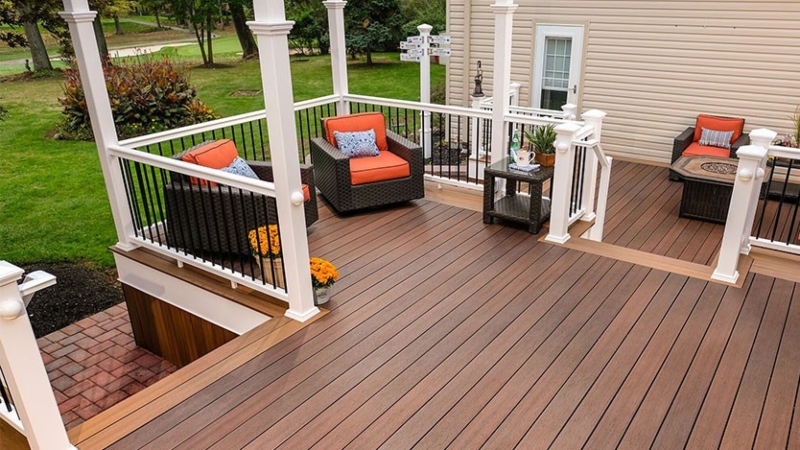
Every deck project eventually comes down to the same fork in the road: pay less now with wood, or pay more upfront for composite and spend less over time. The right answer depends less on which material is “better” and more on how long you plan to own the deck, how much upkeep you’re willing to do, and where you live.
Here’s what the numbers actually show in 2026.
Upfront Cost: Wood Still Wins on Day One
Pressure-treated wood remains the cheapest way to get a deck built. For a standard 300–320 square foot deck, installed pricing typically breaks down like this:
| Material | Installed Cost (per sq ft) | 300 sq ft Deck |
| Pressure-treated pine | $20–$35 | $6,000–$10,500 |
| Cedar / redwood | $30–$50 | $9,000–$15,000 |
| Mid-grade composite | $30–$55 | $9,000–$16,500 |
| Premium composite / PVC | $50–$80+ | $15,000–$24,000+ |
Pricing varies by region, deck height, railing style, and labor rates, so these are planning ranges rather than quotes — but the pattern holds nationally: composite typically costs 30–80% more than pressure-treated wood at the time of installation.
If your budget is fixed and you need the deck built this season, wood is usually the more attainable option.
The Number the Lumber Yard Doesn’t Show You: Maintenance
The upfront price gap tells only part of the story. Wood decking needs regular staining and sealing to prevent moisture damage, graying, and rot — typically every one to three years, depending on climate and sun exposure. A professional staining job for a 300 square foot deck generally runs $300–$900 per cycle once labor and materials are included. Over a decade, that can add up to several thousand dollars, before accounting for board replacement due to splintering or rot.
Composite decking, by contrast, generally needs nothing more than an occasional wash with soap and water. There’s no annual sanding, staining, or sealing cycle to budget for or schedule around.
Because of this, most cost analyses find that composite’s total cost of ownership drops below wood’s somewhere around year 6 to 10, depending on the wood species and how consistently it’s maintained. Own the deck longer than that, and composite is typically the cheaper choice overall — even though it costs more to install.
Durability and Climate: Why Location Matters
Deck material performance isn’t uniform across the country, which is one reason “best decking material” doesn’t have a single universal answer.
- Freeze-thaw regions (like the Chicago suburbs): Repeated freezing and thawing stresses wood fibers and fasteners, accelerating splitting and warping over time. Composite’s engineered, moisture-resistant core holds up better through Illinois winters and doesn’t require the seasonal inspection wood does after a hard freeze-thaw cycle.
- Hot, humid regions (like metro Atlanta): High humidity and UV exposure speed up mold, mildew, and fading in untreated or under-maintained wood. Composite resists moisture absorption, and most manufacturers now offer UV-stabilized caps that resist fading far longer than wood stain does.
Homeowners in either climate can build a long-lasting deck with either material — the difference is how much ongoing attention it needs to get there. A contractor experienced in both climates, rather than just one, tends to spot these tradeoffs earlier in the design process.
Lifespan and Resale Value
Well-maintained pressure-treated wood decks typically last 10–20 years before major boards need replacing. Composite decking, particularly capped or PVC varieties, is commonly backed by 25 to 50-year warranties and can outlast wood by a decade or more with minimal intervention.
Interestingly, resale data doesn’t fully favor composite the way many homeowners assume. According to recent Cost vs. Value reporting, wood deck additions recoup a higher percentage of their cost at resale than composite (roughly 88–95% for wood versus 68–88% for composite) — largely because the lower upfront cost makes that percentage easier to clear. In dollar terms, composite still often returns more in absolute resale value, particularly in markets where buyers increasingly expect low-maintenance outdoor living space as standard.
Which One Should You Choose?
A simple way to think about it:
- Choose wood if: you’re working with a tighter budget, want a classic natural look, plan to sell within the next few years, or don’t mind a yearly maintenance routine.
- Choose composite if: you’re staying in the home long-term, want to avoid recurring maintenance costs and effort, live in a climate that’s hard on natural wood, or want a longer warranty on the finished structure.
Neither material is objectively “better” — they’re optimized for different priorities. The deck that regrets you least is the one that actually matches how you plan to live in and maintain your outdoor space.
Getting an Accurate Quote
Because pricing swings so widely by brand, region, and design complexity, the ranges above are a starting point for budgeting — not a substitute for a written estimate. When comparing quotes, make sure each one breaks out materials, labor, permits, and any demolition or site prep separately, and confirm the contractor is licensed and insured for your area.
For homeowners in the Chicago suburbs or metro Atlanta specifically, Royal Deck builds both composite and wood decks and can walk through material tradeoffs for your exact climate, HOA requirements, and budget during a free on-site consultation.
Frequently Asked Questions
Does composite decking really last 25 years?
Most reputable composite brands back their products with 25 to 50-year warranties against fading, staining, and structural defects, though actual lifespan depends on installation quality and maintenance.
Is composite decking worth the extra cost?
For homeowners staying in their home more than 6–10 years, composite typically costs less overall once maintenance savings are factored in, despite the higher installation price.
Can you install composite decking over an existing wood deck?
Only if the existing framing and joists are structurally sound and free of rot — composite boards can replace old decking on a solid frame, but a compromised substructure needs to be addressed first.
What’s cheaper to maintain, wood or composite?
Composite is significantly cheaper to maintain, requiring only occasional cleaning versus wood’s recurring staining and sealing schedule every one to three years.
For more details, Click here