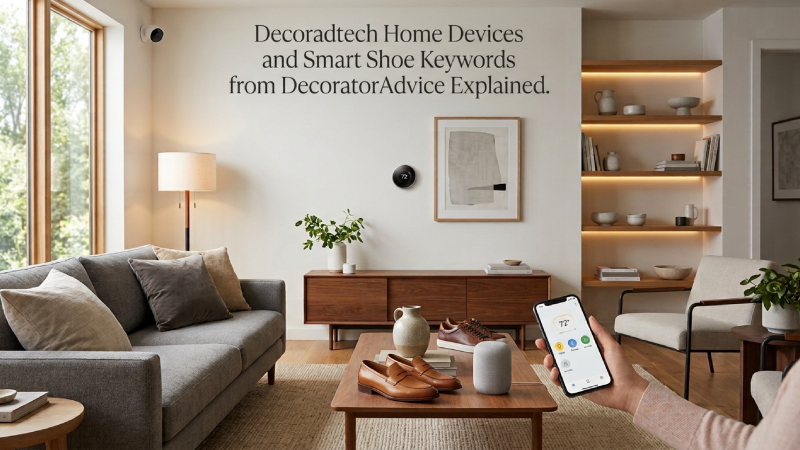
Smart-home technology becomes more useful when it fits the way a room already works. Decoradtech home devices from DecoratorAdvice describes an approach that connects smart technology with interior design instead of treating gadgets as separate additions. The available DecoratorAdvice material discusses smart lighting, climate control, security, automation, and device placement as parts of a broader home-design strategy.
For U.S. homeowners, the practical question is not simply which device has the most features. It is whether the device solves a real problem, works with the existing setup, looks appropriate in the room, and remains manageable over time.
Quick Answer
Decoradtech home devices from DecoratorAdvice are best understood as smart-home devices selected and positioned with both technology and interior design in mind. Common examples include smart lighting, thermostats, smart plugs, security cameras, and doorbells. The approach emphasizes useful automation, clean placement, compatibility, security, privacy, and a design that does not become overwhelmed by technology.
Quick Facts About Decoradtech Home Devices
|
Area |
What It Means |
Practical Focus |
|
Smart lighting |
Connected bulbs, switches, or fixtures |
Scheduling, ambiance, convenience |
|
Climate control |
Smart thermostats and related controls |
Temperature management |
|
Automation |
Devices working from schedules or triggers |
Less repetitive manual control |
|
Security |
Cameras, sensors, and doorbells |
Awareness and monitoring |
|
Design integration |
Technology considered with room layout |
Cleaner appearance and placement |
DecoratorAdvice describes Decoradtech as a category connecting smart-home ideas with deliberate decorating decisions. Its published material emphasizes planning the room before buying technology, rather than allowing devices to dictate the design.
What Makes Decoradtech Home Technology Different?
The central idea is integration. A conventional smart-home purchase often starts with a device: a homeowner buys a bulb, camera, thermostat, or speaker and then finds somewhere to put it. A decor-focused approach reverses that process.
First consider the room, routine, available outlets, furniture, lighting, network coverage, and visual style. Then select technology that fits those conditions.
For example, a smart plug can automate a table lamp without replacing the entire lighting system. A smart thermostat can provide remote temperature control, but its location and compatibility with the existing HVAC system still matter. A camera needs an appropriate viewing position without becoming an unnecessary visual distraction.
The Main Device Categories
The most relevant decoradtech smart home devices fall into several groups:
- Smart lighting: bulbs, switches, strips, and connected fixtures.
- Smart thermostats: connected temperature controls.
- Smart plugs: simple automation for compatible appliances and lamps.
- Smart security cameras: connected video monitoring devices.
- Smart doorbells: entryway devices combining doorbell functions with connected features.
These categories have different installation, network, privacy, and compatibility requirements, so they should not automatically be treated as interchangeable.
How to Choose Smart Home Devices for Each Room
Room-by-room planning helps prevent technology from becoming clutter. The best device depends on what the room is used for and what problem needs solving.
Living Room
The living room often benefits from smart lighting and smart plugs because they can automate lamps without major changes. Device placement also matters. A hub or voice assistant should not be buried inside a cabinet if that location interferes with connectivity.
A practical setup might use one or two automated lamps, a conveniently positioned control device, and cable management that keeps power cords away from walkways.
Kitchen
Kitchen technology should prioritize convenience. Under-cabinet smart lighting can support task areas, while automation can control selected lights according to a schedule.
Because kitchens already contain many appliances, adding devices without a specific purpose can create unnecessary complexity. Start with the function that solves the clearest daily problem.
Bedroom and Entryway
Bedrooms generally benefit from simple lighting and climate routines. Entryways may benefit more from smart doorbells, lighting, or compatible security devices.
Security technology requires additional attention to privacy and account protection. The FTC recommends securing the home router, changing default credentials, enabling available security features, and keeping connected devices updated.
Comparing Smart Home Options Before Buying
Features alone do not determine whether a device is suitable. Compatibility, placement, maintenance, and support can matter just as much.
|
Device Type |
Useful For |
Key Question Before Buying |
|
Smart bulb |
Automated room lighting |
Does it fit the existing fixture? |
|
Smart plug |
Lamp and appliance scheduling |
Is the connected appliance compatible? |
|
Smart thermostat |
Temperature control |
Is it compatible with the HVAC system? |
|
Security camera |
Remote visual monitoring |
What privacy and storage controls are provided? |
|
Smart doorbell |
Entryway awareness |
Does the installation location provide a suitable view? |
Interoperability is another consideration. The Connectivity Standards Alliance describes Matter as a standard designed to improve interoperability among compatible smart-home devices and systems.
That does not mean every Matter-compatible device automatically works with every feature or setup. Users should still check the manufacturer’s current compatibility information before purchasing.
Benefits and Limitations of Decoradtech Smart Home Solutions
A well-planned setup can make repetitive tasks easier, improve control over lighting and temperature, and reduce the visual disorder that can result from poorly placed technology. DecoratorAdvice’s own material similarly emphasizes planning, flexible systems, and technology that supports rather than dominates the room.
There are limitations, too. Connected devices depend on software, networks, power, and manufacturer support. Some products require separate apps or hubs. Cameras and voice-enabled devices can also introduce privacy considerations.
NIST research has highlighted the importance of updates for smart-home security and found that consumers can experience confusion around how updates are delivered. decoradtech home devices from decoratoradvice?
A Practical Selection Checklist
|
Check Before Purchase |
Why It Matters |
Simple Action |
|
Compatibility |
Prevents setup problems |
Check platform and device requirements |
|
Placement |
Affects appearance and performance |
Measure the intended location |
|
Connectivity |
Devices need reliable communication |
Consider network coverage |
|
Privacy |
Cameras and assistants may process data |
Review privacy controls |
|
Updates |
Security and functionality can depend on support |
Check update policy |
|
Long-term support |
Unsupported devices can become problematic |
Research manufacturer support |
Common Mistakes to Avoid
The first mistake is buying devices before deciding what the room actually needs. This can produce visible cables, awkward placement, duplicate functions, and unnecessary spending.
Another mistake is hiding connected equipment purely for aesthetic reasons. A device may need an appropriate location for reliable communication, so visual concealment should not compromise functionality.
Ignoring security is another avoidable problem. The FTC recommends unique passwords, two-factor authentication where available, security settings, and regular updates for connected devices.
Finally, avoid automating everything at once. Start with a few routines that solve genuine problems. Once those work reliably, additional automation can be evaluated.
A Simple Decoradtech Setup Strategy
For a beginner, a staged approach is usually easier to manage:
- Identify one everyday inconvenience.
- Choose one device category that addresses it.
- Check compatibility before purchasing.
- Plan the device’s physical location.
- Configure security and privacy settings.
- Test the automation manually.
- Add another device only when there is a clear benefit.
This approach keeps decoradtech home technology focused on practical improvement rather than the number of gadgets installed.
Frequently Asked Questions
What are decoradtech home devices?
Decoradtech home devices are smart-home products considered alongside interior design, room layout, and everyday use. The concept can include lighting, climate controls, plugs, security devices, and other connected technology.
Which smart home device should beginners start with?
A smart plug or smart light can be a straightforward starting point because these devices can address simple automation needs without requiring a whole-home installation.
Are smart home devices secure?
Smart-home security depends on the device, network, account settings, software support, and user configuration. Strong passwords, available two-factor authentication, secure Wi-Fi, and timely updates can reduce avoidable risks.
Do smart devices from different brands work together?
Some can, but compatibility varies by device and platform. Standards such as Matter are designed to improve interoperability, although buyers should still verify the specific products and features they plan to use.
How can smart technology avoid looking cluttered?
Plan device locations before purchasing, coordinate visible hardware with the room, manage cables carefully, and prioritize devices that solve clear problems. Technology should support the room’s function rather than dominate its appearance.
Building a More Practical Smart Home
Decoradtech home devices from DecoratorAdvice are best approached as part of a broader design-and-technology decision rather than as a collection of gadgets. Smart lighting, thermostats, plugs, cameras, and doorbells can all serve useful purposes, but their value depends on the problem they solve and how well they fit the home’s existing environment.
For U.S. homeowners, the strongest planning process is straightforward: define the need, check compatibility, consider placement, protect connected accounts, and add technology gradually. That keeps smart-home improvements useful, manageable, and visually appropriate. Click for more details