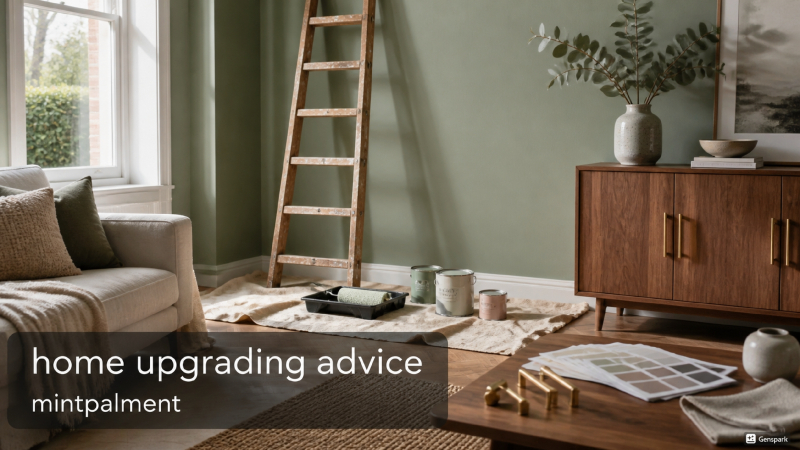
Most home improvement content tells you what to buy. The more useful version tells you how to think. The difference decides whether your upgrade budget produces a home you love or a stack of receipts you regret.home upgrading advice mintpalment??
Before we get to rooms and materials, an honest note about the word that probably brought you here. Mintpalment is not a company, a certification, or a product you can look up and verify. Searching it turns up a cluster of similarly named home-improvement sites — Mint Palment, Home Mint Palment, and a few others — that use the name to stand for a shared philosophy: upgrades that stay affordable, look good, add practical value, and work in real life. That idea is worth taking seriously even though the term itself isn’t an institution. So consider this home upgrading advice built from checkable facts: how to order your work, judge whether an upgrade earns its place, understand what money comes back, and hire help without getting burned.
The Expensive Habit Nobody Lists in the Budget
The most damaging upgrade error has nothing to do with taste. It’s sequencing — doing work in the wrong order, so that earlier work quietly erases itself.
Picture a homeowner who pays to have kitchen cabinets refinished, then discovers the wall behind the sink has been rotting for years. The cabinet work wasn’t wrong; it was early. Out it comes, along with the fresh finish. Multiply that scene by a few rooms and you’ve rebuilt the project once, paid for it twice.
The general rule is simple: fix what’s behind and above before you touch what’s in front. Structure before finishes. Patching before painting. Roof and gutters before windows. Floors go in after the walls stop producing dust, because nobody wants to sweep construction grit off a brand-new surface for a month.
For the room you care about most, draw a dependency map before buying anything: what has to be whole before the next layer can rest on it? Work down the list in that order, and the project gets cheaper by default — because nothing gets done twice.
Three Questions to Ask Before Every Upgrade
Whatever the project, running it through three questions takes about thirty seconds and filters out most bad purchases.
First, does it solve a problem, or only change an appearance? Fixing a door that doesn’t latch and replacing a cracked outlet faceplate both improve the room; only one of them shows up in how the room functions.
Second, will someone in the house actually use it every week? A designer light fixture above a dining nook used twice a year is art with a price tag. A dimmer in the kitchen you cook in every night changes the way the whole house feels after dark, for a fraction of the cost.
Third, what’s the cost per year of honest use — and if you might sell within five years, how much could it plausibly come back? The math is brutal on rarely used luxuries and kind to daily essentials. That’s the whole framework. Most regrettable upgrades fail question one or two, not question three.
Where the Money Comes Back — and Where It Stays Gone
Industry cost-versus-value studies, compiled from real remodeling projects, draw a surprisingly consistent line. The lightest-scope kitchen updates can recover a very large share of what they cost — analyses put recovery for the least ambitious refreshes as high as the mid-90s percentage — while full major kitchen remodels typically return only a third to half of their price. Midrange bathroom remodels commonly land somewhere around three-quarters.
The takeaway is not that remodeling is a bad investment. It’s that recovery tracks scope, not quality. Big projects touch more systems, cost more, and buyers don’t reward them proportionally — they reward a house that’s simply in good condition.
For people who plan to stay put, resale is the wrong yardstick entirely. What matters is daily usefulness over the years you’ll actually live there. But if a sale is plausible, weigh the neighborhood too: a luxury kitchen sitting inside a modest house can stretch the asking price past what local buyers expect to pay, and the upgrade ends up subsidizing the next owner instead of your equity.
At a Glance: How Common Upgrades Compare
| Upgrade | Typical Scope | Price Tag | Daily-Use Value | Typical Recovery at Resale | Best When |
| Paint refresh | Walls, trim, or one feature wall | Low | High | Among the highest of any upgrade | Fixing a dated look fast or prepping to sell |
| Minor kitchen refresh | Refinished cabinets, new hardware, updated lighting | Moderate | High | Lighter scopes often recover 70–90% of cost | The kitchen works fine but looks tired |
| Midrange bathroom remodel | New fixtures, tile, and vanity in a standard layout | Moderate to high | High | Around two-thirds to three-quarters on average | Daily family use and a badly dated bath |
| Major kitchen remodel | Full layout change, new cabinets and appliances | Very high | High | Roughly a third to a half of cost | You plan to stay for years, not sell soon |
| Structural and water fixes | Roof, foundation, plumbing, drainage | Varies | High | Protects value rather than adding it | Always first, regardless of resale plans |
| Lighting and hardware swaps | Bulbs, dimmers, switch plates, handles | Very low | High | Negligible on its own | Any month, any budget |
These figures are typical published averages; actual recovery shifts with your region, the local market, and the exact scope of work.home upgrading advice mintpalment?
The Permit Question Nobody Wants to Ask
The word permit makes projects feel heavier, so it tends to get skipped. It shouldn’t.
Work that touches structure, electrical wiring, or plumbing layout almost always needs approval before it starts. Cosmetic swaps — painting, flooring, replacing a faucet — usually don’t. The rules vary town to town, and a ten-minute phone call to your local building department settles the question faster and more reliably than any internet search.
Skipping matters less on the day of the work than on the day the work has to stand up in public: a home inspection during a sale, or an insurance claim after a fire or flood. Unpermitted electrical work can complicate both. A deck built without a permit — however well built — can become a bargaining chip against you at closing, turning a past project into a current problem.
Hiring Help Without Handing Over the Keys
Good contractor checks are boring, which is exactly why they get skipped. Three written bids that describe the same scope. A license number you can verify with the state. Proof of insurance, including workers’ compensation. References from projects similar in size to yours — not just the polished portfolio photos.
The red flags are equally undramatic: pressure to sign that same day, a discount for paying cash, a demand for a large deposit up front, or reluctance to put the scope in writing. Any one of those deserves a slower walk through the door.
Also worth asking: how are change orders priced? Because change orders — not the original estimate — are where upgrade budgets actually die. The contractor who can explain how a mid-project change gets quoted is the contractor you can disagree with without disaster.
Budgets That Survive Contact With Reality
Budgets fail the same way almost every time: the visible costs get counted, and the invisible ones don’t. Permits. Dumpster rental. Tools. Moving furniture out of the way. Patching whatever gets bruised while the work happens. A project that looks like $8,000 on paper regularly needs $10,000 in reality.home upgrading advice mintpalment?
The standard cushion is a contingency of 10 to 20 percent set aside before you commit, not discovered after. Working one room at a time spreads the cost and keeps the house livable. And it’s worth holding off on new furniture until construction is done — dust finds every seam, and final measurements have a way of changing what fits.
Low-Cost Upgrades That Reshape How a Room Feels
Not every meaningful upgrade costs money, and some of the best ones cost almost nothing at all. The ones that work change perception rather than square footage.
Swap the beige plastic switch plates and outlet covers for a finish that matches the door hardware — a room instantly reads more considered. Change the bulbs to a warm color temperature, around 2700K, and the same fixtures suddenly flatter everything they light. Hang curtains wider and higher than the window frame to make the ceiling feel taller. Replace the front-door hardware and house numbers, the two things every visitor touches or sees first. Clear one surface in the room completely and leave it that way. Paint the front door a color you actually chose rather than inherited.
Individually, these are trivial. Together, they read as intentional — which is the mintpalment philosophy at its best: a string of small, practical decisions that add up to a home that feels designed, with no big-ticket purchase required.
The Point of Upgrading
Every useful upgrade follows the same pattern: right order, real daily use, scope that fits the house, paperwork in place, and room in the budget for surprises. The projects that disappoint are the ones that skip a step — the early finish, the oversized remodel, the unpermitted wiring, the estimate with no cushion.home upgrading advice mintpalment?
Start somewhere small and honest: pick the room you use most, draw its dependency map, and run your shortlist through the three questions. The home improvement that actually improves your home tends to be the one that improves your weekdays.
Frequently Asked Questions
Should I upgrade before moving in, or after living there for a while?
Live through at least one full season first. Daily routines reveal what’s actually broken — the light that makes cooking miserable, the closet that fits nothing — and pre-move upgrades tend to target rooms you haven’t really used yet. The exception is structural or water-related work, which doesn’t get better with waiting.
When does DIY stop being cheaper?
When the work touches systems — electrical, gas, load-bearing structure — or when a mistake can’t be undone cheaply. A failed paint job costs a weekend; a failed tile job costs a tear-out. Add in tool rentals, the permit requirements that often demand licensed pros, and the redo risk, and the “savings” evaporate quickly.
Do my upgrades need to match what the neighbors have done?
No, but avoid over-improving. A home isn’t appraised in a vacuum, and spending far past what comparable houses nearby support rarely comes back. Upgrade for your own use first; if a sale is coming, keep the scope in the same general league as the street.
Conclusion
Home upgrading stops being guesswork the moment you treat it as a sequence of decisions instead of a shopping list. Fix what’s broken first, upgrade what you touch daily, size every project to the house it lives in, and leave room in every budget for the surprise that always arrives. Those four habits cost nothing, and they’re the difference between a home that quietly gets better every year and a renovation that eats a decade of savings.home upgrading advice mintpalment?
If you take one thing from all of this, let it be this: the best next upgrade is the smallest one you’re certain about. Repaint the front door. Fix the latch. Sort the lighting. Do that this month, live with it, and let the next decision come from what the house — and the people in it — actually ask for. That’s what every upgrade worth doing has in common: it answers a real question, and it earns its place in your week.